Bombed the Audition, Booked the Career: How Hollywood's Biggest Stars Turned Rejection Into Legendary Roles
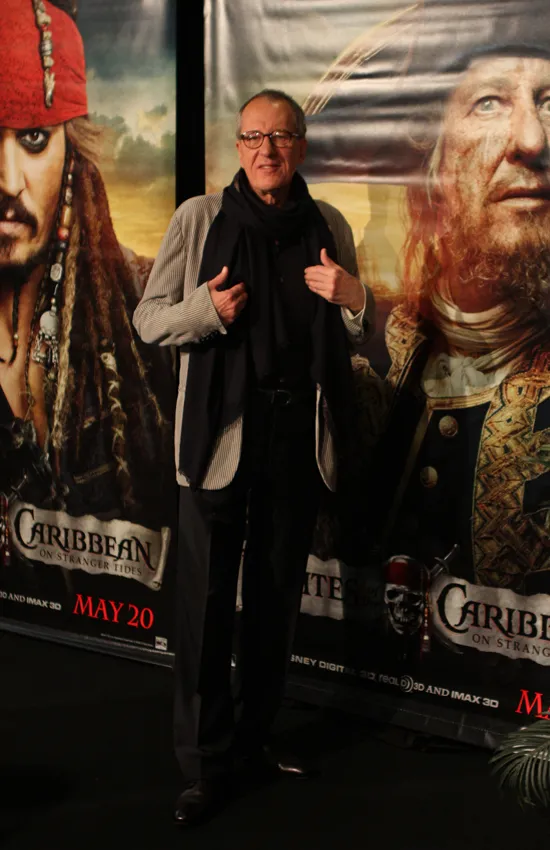
Photo: Eva Rinaldi, CC BY-SA 2.0, via Wikimedia Commons
Hollywood loves a good origin story. The scrappy underdog, the last-minute callback, the director who sees something nobody else does. But what about the origin story where the actor walks into the audition room, completely falls apart, and somehow still ends up with a career that makes everyone forget it ever happened? Yeah, those stories exist too — and honestly, they're way more interesting.
Let's talk about the casting couch plot twist nobody puts in the press releases: the audition disaster that somehow became a launchpad.
When the Room Goes Silent (And Not in a Good Way)
Every working actor has an audition horror story tucked somewhere in their back pocket. Forgot the lines. Went too big. Cried when the scene wasn't supposed to be sad. But for certain stars, those disasters didn't just fade into embarrassing memory — they became the weird, winding path to something better.
Take Jennifer Lawrence, who famously auditioned for several projects before The Hunger Games came along and basically handed her a generation-defining franchise. By her own admission, she was nervous, raw, and deeply uncertain during earlier callbacks for roles she didn't get. Casting directors who've spoken publicly about working with her in those early years described a performer who had undeniable presence but hadn't yet figured out how to channel it under pressure. She bombed. She moved on. And then she didn't.
Or consider the well-documented story of Lupita Nyong'o, who auditioned for roles where she was told her look wasn't "commercial" enough. Her audition tape for 12 Years a Slave was reportedly rough around the edges the first time around before she refined it into something that won her an Academy Award. The rejection-to-Oscar pipeline is more crowded than Hollywood likes to admit.
The Callback That Wasn't — Until It Was
Here's something casting directors will tell you off the record: the audition is only part of the equation. Connections matter. Timing matters. Sometimes a director meets an actor at a party six months after a disastrous audition and sees something completely different. The context shifts. The role evolves. And suddenly the person who bombed is the perfect fit.
Bradley Cooper's early career is a solid case study here. Before he became the guy from Silver Linings Playbook and A Star Is Born, Cooper was grinding through auditions with a hit-or-miss record that would make most people reconsider the profession entirely. He's been candid in interviews about auditions that went nowhere, including for roles in projects that went on to be massive successes without him. But the relationships he built during those years — with directors, producers, and fellow actors — created a web of goodwill that eventually paid off in a very big way.
This is the part of the story the industry doesn't love to publicize, because it complicates the meritocracy narrative. Yes, talent matters. But persistence, likability, and showing up in the right rooms at the right time? That stuff matters too.
The Redemption Audition: When a Second Chance Actually Happens
Sometimes the universe just gives you a do-over. A role gets recast. A sequel comes around. A director who rejected you years ago is now developing something that's basically written for you.
One of the most talked-about examples in recent years involves actors who were passed over for franchise roles — think the Marvel or DC universes — only to circle back into those same studios through a different door. Charlie Hunnam famously dropped out of Fifty Shades of Grey after a chaotic casting process, but his prior audition struggles in Hollywood are well-documented. He rebuilt his reputation through Sons of Anarchy and earned his way back into high-profile conversations.
Casting director Debra Zane, who has worked on everything from Ocean's Eleven to Lincoln, has spoken in industry panels about how she keeps extensive files on actors who didn't get the part. "You don't forget a face that does something interesting, even if it's the wrong something," she's noted. That idea — that a memorable failure can be more valuable than a forgettable success — is genuinely how some careers get built.
Dumb Luck or Earned Redemption?
Okay, let's be real for a second, because this is Pop Chats and we're not here to just hand out inspirational posters.
Some of these comeback stories are legitimately earned. The actor who bombed went home, worked with a coach, developed their craft, and came back better. That's real. That happens. But some of these stories are also just... connections. A phone call from the right agent. A director who owed someone a favor. A studio that needed a name attached to a project and made a deal that had nothing to do with an audition room.
The entertainment industry is a place where both of those things are simultaneously true, and pretending otherwise would be doing you a disservice. When Jonah Hill showed up in The Wolf of Wall Street, it wasn't because he crushed a cold audition — it was because he called Martin Scorsese directly and lobbied hard for the part, reportedly offering to work for scale. Was that talent? Was that hustle? Was that connections? It was all three, braided together in a way that's impossible to fully separate.
What the Bomb Actually Teaches You
Here's the thing nobody really wants to say out loud: bombing an audition can be more educational than nailing one. When you get the part on the first try, you don't always understand why. When you blow it completely, you're forced to figure out what went wrong — and that process, painful as it is, tends to produce sharper, more self-aware performers.
Actors like Viola Davis, who faced years of rejection before becoming one of the most decorated performers of her generation, have talked openly about how the auditions that didn't go well forced them to interrogate their choices in ways that success never would have.
"Rejection is information," Davis has said in various interviews. And the actors who treat it that way — rather than as a verdict on their worth — tend to be the ones who eventually end up in the conversation we're having right now.
So the next time you hear about some A-lister who "almost didn't get" their most famous role, don't just chalk it up to fate. There's probably a disaster audition somewhere in the backstory, a moment of total humiliation that, weirdly, set everything in motion. Hollywood might not put that in the press release, but it's usually in the story.