Checked Out Mid-Season: Why Fans Are Quietly Walking Away From Shows They Used to Worship
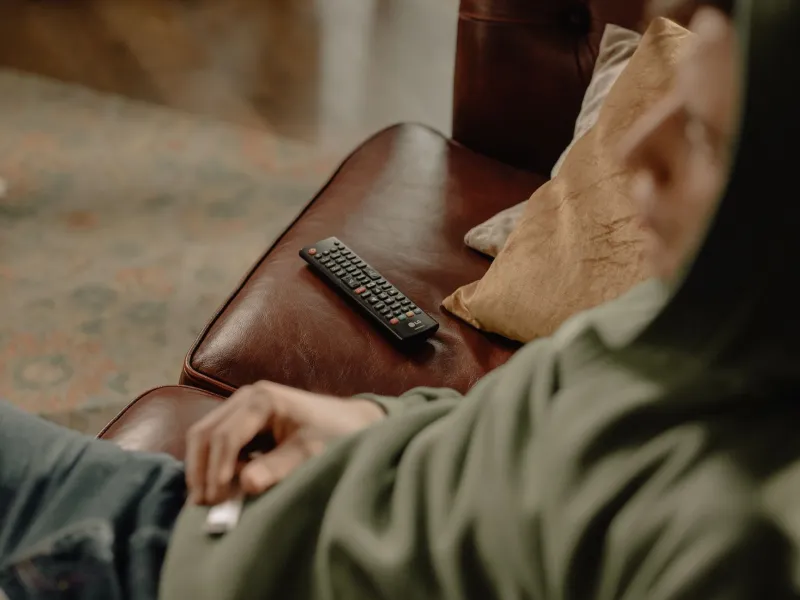
You know the feeling. You're three seasons deep into a show you used to sprint home to watch. You've got merch. You've got opinions about minor supporting characters. You've written passionate defenses of the series in comment sections at 1 a.m. And then one day, you realize you haven't watched the newest episode. Or the one before that. Or, honestly, the last four.
You didn't hate-quit. You just... drifted. And you're absolutely not alone.
Audiences are abandoning long-running series at a rate that's got writers' rooms, streaming executives, and entertainment journalists all asking the same question: what is actually happening?
It's Not Just Bad Writing (Though That Doesn't Help)
The easy answer is that the quality dropped. And sure — sometimes that's true. But the quiet quit phenomenon goes way deeper than a weak story arc or a character assassination that the writers clearly thought was brave and edgy.
Creative exhaustion is a real thing, and it hits fans just as hard as it hits the people making the show. When you've been emotionally invested in a fictional world for five, six, seven years, the relationship starts to feel like work. The stakes that used to feel thrilling start to feel repetitive. The character moments that used to hit different start to feel like callbacks to callbacks. At some point, the show stops giving you new things to feel — and you start wondering why you're still showing up.
This isn't a new phenomenon, but it's accelerating. And a lot of that acceleration has to do with how we consume and talk about TV now.
The TikTok Effect on Long-Term Investment
Here's where it gets genuinely interesting. The way online communities engage with television has fundamentally shifted what fans expect from the experience of being a fan. TikTok, in particular, has rewired the feedback loop.
In the old model, you watched a show, you talked about it at the office or on a forum, and the conversation built gradually over time. Your investment deepened through slow accumulation. Now? A single episode drops, and within hours there are thousands of thirty-second takes flooding your For You Page. The most extreme reactions — the most outraged, the most ecstatic, the most dramatic — get the most traction. And suddenly the discourse has already peaked before you've even processed how you feel about what you just watched.
That instant discourse machine is exhausting. It flattens the experience of watching something slowly and letting it grow on you. And when a show has a rough patch — which almost every long-running series does — the TikTok pile-on can be so swift and so brutal that it poisons the well for casual fans who might have otherwise stuck around.
Franchise Oversaturation Is Burning People Out
Let's also talk about the sheer volume of content that audiences are expected to keep up with. The streaming era promised us infinite choice, and it delivered — but infinite choice comes with infinite fatigue. When every major franchise has a flagship series, a prequel spinoff, a limited event series, and a documentary companion piece, even the most dedicated fans start making cuts.
The Star Wars fandom is a perfect example. The passion is still there — you can feel it in every comment section. But there's a palpable exhaustion around the question of which of these many, many projects actually matters. When everything is essential viewing, nothing feels essential. And fans, consciously or not, start protecting their emotional energy.
Case Studies in Lost Audiences
The Walking Dead is maybe the most dramatic example of a show that lost its audience mid-run. At its peak, it was a cultural event. By its final seasons, it had become a punchline. The infamous Negan arc — which genuinely traumatized viewers in a way that felt gratuitous rather than meaningful — was a turning point from which many fans simply never came back. The show kept going for years after those viewers walked out, but the cultural conversation had already moved on.
Game of Thrones is a different kind of cautionary tale. The audience didn't drift — they were actively present right up until the finale. But the speed and perceived carelessness of that final season created a retroactive breakup. Fans didn't just stop caring about the ending; they started questioning whether they'd wasted years of investment. That kind of betrayal lingers.
More recently, shows like Westworld and The Handmaid's Tale watched their audiences shrink season by season as the gap between what fans hoped for and what the show delivered became impossible to ignore.
What Creators Keep Missing
The thing that strikes me about most of these audience breakups is that the warning signs were visible long before the final exit. Fan communities were vocal about their concerns. Reddit threads documented the exact moments the love started curdling. Engagement metrics told a story that executives could have read differently.
But there's a structural problem in how TV gets made. Writers' rooms are often locked into long-term plans that don't account for how audiences are actually responding in real time. And by the time a network or streamer acknowledges that something has gone wrong, the casual fans are already gone — and even the die-hards are holding on out of stubbornness rather than genuine enthusiasm.
The shows that manage to hold their audiences through multiple seasons tend to do one thing really well: they make the audience feel like the investment is being honored. Every long-running series will have rough patches. What separates the ones that survive those patches from the ones that don't is whether fans believe the creators actually care about getting it right.
Right now? A lot of fans aren't so sure. And they've got plenty of other content to scroll to instead.